
Friends without borders
The Boston Globe
On the surface, it’s just another coffee date between two friends: We talk about dating (mine), a breakup (hers), work, children real and hoped-for, politics, our shared disdain for athleisure. It’s unremarkable save for one variable. She’s my daughter’s age.
We are unlikely friends — not first-circle, like the women I’ve known for 40 years, but special, as it turns out, for exactly that reason. Generational profiles have calcified into caricature, and yet it’s easy to work around them. I have a pool of candidates, restaurant people I write about and graduate students I’ve taught, but there is opportunity everywhere. All it takes to start a friendship is mutual curiosity and a willingness to ignore stereotypes.
Frinds without age borders: Everyone learns something new, and no one feels trapped by their demographics. Younger and older friends flex our brains, and if that isn’t the dominant prescription for long-term happiness these days, I don’t know what is.
As a culture, we tend to revere the lifelong friendship — one of the few old things we do revere, other than wine — even as we hear that new pursuits will keep older people from mental atrophy as we age. We are encouraged to try a new brain puzzle instead of the usual crossword, or an unfamiliar recipe instead of longtime favorites — anything that provides mental exercise.
Why not apply the same strategy to relationships? Coffee with my young friend is a workout because it covers unknown terrain, unlike old-friend conversations, which tend to have a familiar agenda. And navigating the unexpected improves my listening chops; I have to be ready for anything.
I would be lost without my old friends, but I’d be smaller without my new ones. I assume the same would be true for men. A couple of my younger friends are men — and while we might start out talking about work, we quickly get to more personal stuff. The world feels too unstable to hold back; we’ll take reassuring context wherever we find it.
The defining obstacle, for all of us, is the assumption that someone in their 70s and someone in their 30s can’t possibly have enough in common to be friends. But lifelong friends don’t always have that much in common, either. At a recent dinner with three old friends, the talk revolved around grandchildren and retirement, neither of which are part of my life. If one friend hadn’t noticed the lopsided dynamic and asked about a book I’ve written, I would’ve spent three hours as an affectionate outsider.
Four decades give friends a lot of time to take divergent paths, which we tolerate because we’re friends. If we are equally generous with friends who weren’t yet born when we got married — and if they are, in turn, with friends their moms’ age — we can get past the boomer-millennial divide.
I imagine some topics could be off-limits for bigenerational pals, though I have yet to discover them. The big ones are not: love, loss, family, career, a woman’s efforts to navigate the larger world. I always run out of time before I run out of topics.
And if age-defying friendships revolve more around talking than doing, that’s OK. I’m not invited when my younger friends go to a club, but honestly, I don’t feel the need to do that any more than I feel the need to play golf with an older pal.
There’s onl one potential trap: We cannot default to the parent/child dynamic, unless one of us explicitly asks for that kind of advice or empathy. I have far more experience raising a daughter than I do being a friend to someone her age, so occasionally I need to retool mid-sentence to make advice sound less like instructions than a query about what my competent friend might be considering. I imagine a younger friend has equivalent twinges of “please fix this for me,” and tries to get past them.
Such self-monitoring has its benefits. I like to think that every now and then — heaven knows, not often enough — I stop short of mom mode with my daughter, for which I thank my younger friends. When I listen to her carefully, I hear an autonomous adult weighing options instead of a little girl needing mom, respond in kind, and expand the borders of that budding friendship, too.
More Articles
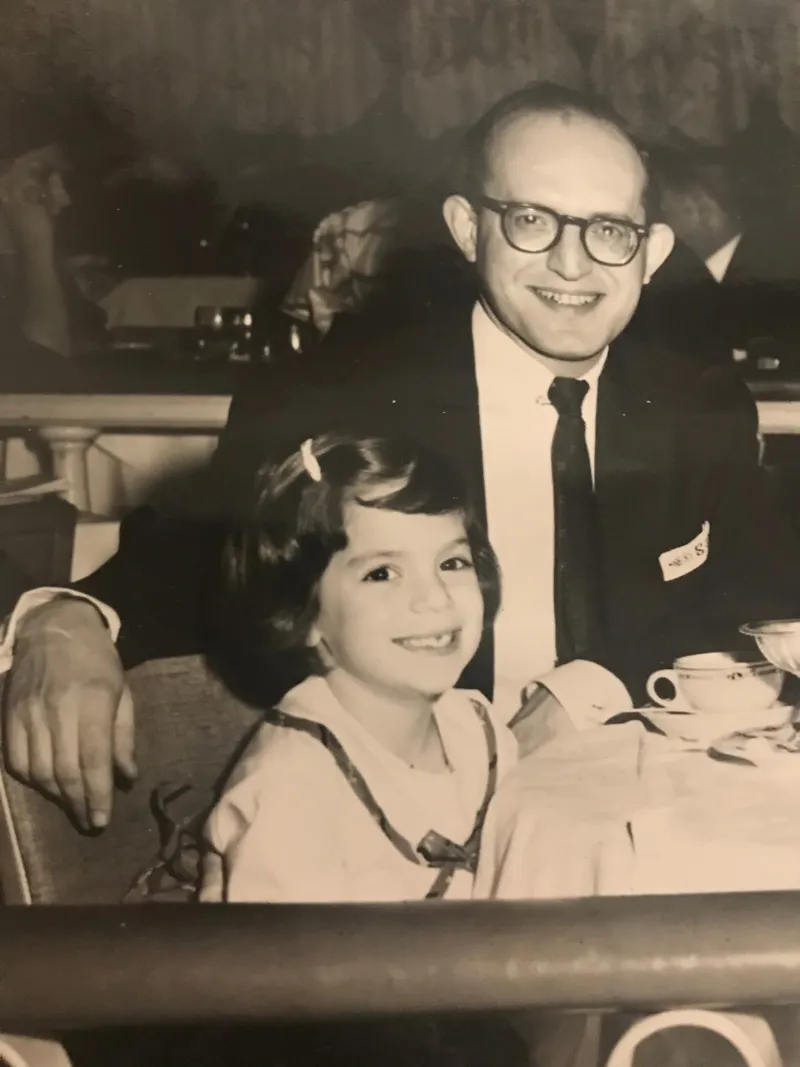
Restaurant baby
Recipe for a happy childhood: Bottomless Shirley Temples while my dad sold stockpots.

A good man is easy to find — and hard to date.
Men prefer younger women. Women over 60, you know I’m right.

Am I too old to get a dog?
To get a dog or not to get a dog, that is the question.

Freebie food: Why we can’t trust restaurant influencers
Tell me if you've heard this one: An influencer walks into a bar. . . . No, wait. It's no joke.
Second Helpings
Subscribe for updates, articles, and commentary directly to your inbox.